The Hotton Caves
Discovered in 1958, the Hotton Caves reveal another landscape beneath the Calestienne hills. A guided visit where wonder meets research, protection and geological patience.

A chance discovery followed by curiosity
The modern story began in 1958 when blasting in a Hampteau quarry opened an underground passage rich in formations. Something invisible from the surface suddenly became a subject of exploration. Cavers set out to understand, explore and survey the network. Tourist discovery therefore began with an industrial event and a programme of study.
This unexpected beginning is the place's most telling anecdote: a whole world lay beneath a seemingly familiar landscape. We like the story because it recalls chance's role in discovery, but also what follows. An opening in rock is not enough; method, observation and a determination to preserve are needed.
Another face of the Calestienne
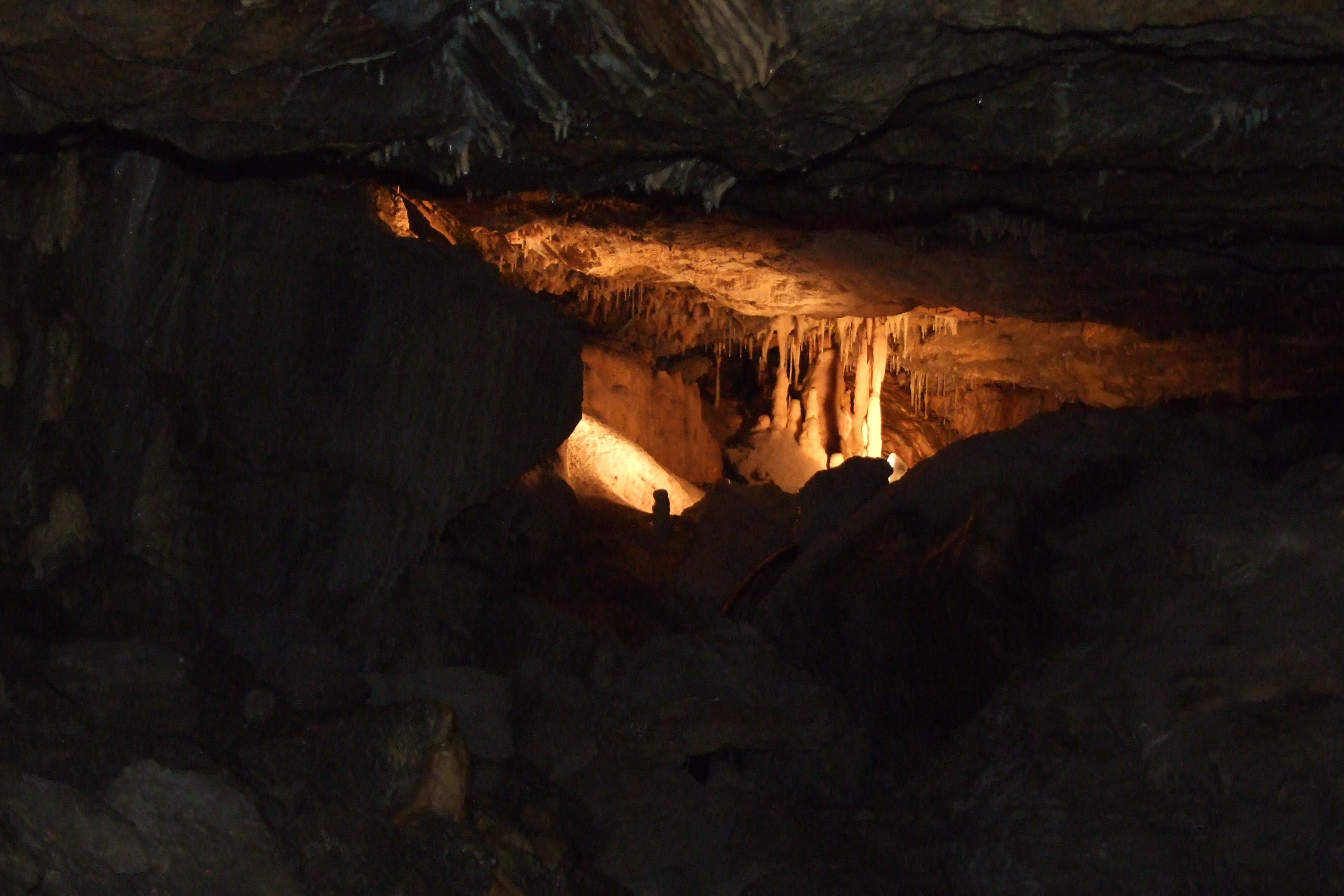
The caves belong to the limestone belt of the Calestienne. Water moves through fractures, gradually dissolves limestone and shapes passages and chambers. Other deposits slowly build stalactites, stalagmites and curtains seen during the visit. The network thus shows two complementary natural processes: hollowing out and depositing.
The underground canyon is among the route's most impressive features. Its dimensions reveal a scale photographs convey imperfectly. An underground river recalls that this is a living system, not a room decorated once and for all. The guide's explanations take you beyond merely comparing shapes with familiar objects.
From exploration to protection
Tourism development required an entrance to be created and the network protected. The Hotton Caves are listed in their entirety, a status recognising the whole rather than a single beautiful chamber. This also shapes visiting: keeping to the route, not touching formations and respecting instructions helps pass on the heritage.
The site belongs to the Famenne-Ardenne Geopark, a UNESCO Global Geopark. Again, distinguish this area-wide label from individual inscription on the World Heritage List. The caves' value is understood within a wider landscape: relief, waterways and rocks compose a history continuing beyond the galleries.
A discovery outing, inside and out
The guided route includes stairs and a substantial change in level. Check accessibility and bring clothing suited to a cool underground environment. The site states a year-round temperature around 12°C. This stability contrasts with outside weather and forms part of the experience, but does not replace preparation.
After the depths, the educational Calestienne garden and outdoor areas reconnect you with the landscape. You can relate what you saw underground to the terrain above. For Wallonie Gourmande, Hotton is a discovery destination in its own right: entertaining, surprising and encouraging understanding. We recommend leaving time for the guided tour, then extending the outing calmly in the region. Check departures, bookings and practical arrangements on the official website before coming.
Photos and credits
Photo 1 — Limestone formation in the Hotton Caves. JonasB 7 · CC BY-SA 4.0 · Wikimedia Commons source.
Photo 2 — Interior view of the Hotton Caves network. Wiki-uk · Public domain · Wikimedia Commons source.
Photo 3 — View towards the valley from woodland near the Hotton Caves. JonasB 7 · CC BY-SA 4.0 · Wikimedia Commons source.